













Şirket
28 September 2026
 10:07
10:07 Allen Wang | CEO and Founder, HIPAD
Updated: September 28, 2026
A caster wheel manufacturer should be evaluated against the equipment, floor, mounting interface and required movement, not from wheel diameter alone. An RFQ needs the caster format, wheel material, mounting, bearing, brake, load-validation method, quantity and packaging before a production-intent sample can be approved.
The supplied HIPAD product reference lists swivel, rigid, locking and heavy-duty casters. Wheel materials include PU, rubber and nylon; mounting can use a plate or stem; bearing options include ball or roller types; and braking options include wheel lock or total lock. Load range is described as customizable, so the exact rating must be confirmed for the selected configuration.
| RFQ field | Published options | Evidence to approve |
|---|---|---|
| Caster format | Swivel, rigid, locking, heavy-duty | Assembly drawing and application position |
| Wheel material | PU, rubber, nylon | Model-specific material declaration |
| Mounting | Plate or stem | Hole pattern or stem dimensions |
| Rulman | Ball or roller | Bearing construction for quoted model |
| Brake | Wheel lock or total lock | Brake function demonstrated on sample |
| Load | Customizable range | Declared rating and agreed validation method |
Start with the equipment drawing, total operating mass, number and position of casters, floor condition, travel pattern, speed or duty description, mounting space and environmental exposure. State whether the load is static, moving or subject to impact. The public source does not publish one universal load value, so the manufacturer must map the application to a specific model.
Swivel casters allow direction changes, while rigid casters keep a fixed rolling direction. Many equipment layouts combine the two, but the correct arrangement depends on steering behavior and the frame geometry. Compared with choosing four identical catalog wheels by appearance, a defined layout gives the supplier enough information to review turning clearance and mounting orientation.
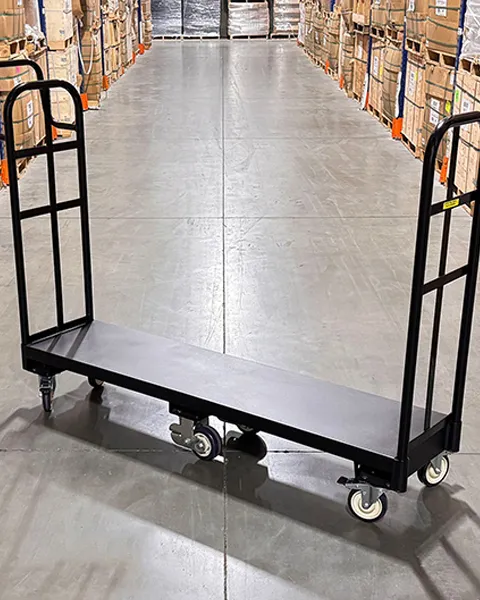
All three materials appear in the published range, but a material name alone does not establish floor protection, rolling resistance, noise, chemical compatibility or temperature suitability. Give the manufacturer the actual surface and environment, then request model-specific material and performance evidence. Do not transfer a test result from one wheel construction to another.
A plate caster needs a matching plate size, hole pattern, fasteners and supporting frame. A stem caster needs the stem type, diameter, length and receiving structure. Neither is universally better. The decisive issue is whether the equipment can support the mounting interface without distortion or loosening.
The HIPAD reference lists both as options. Ask which bearing is used in the wheel and, where applicable, in the swivel section. Record lubrication, sealing and service requirements for the quoted configuration rather than assuming every bearing option has the same duty.
A wheel lock is intended to restrain wheel rotation. A total-lock design is intended to restrain both wheel rotation and swivel action. Confirm the actual mechanism on the sample because naming can vary between product lines. Show pedal access and surrounding clearances on the equipment drawing.
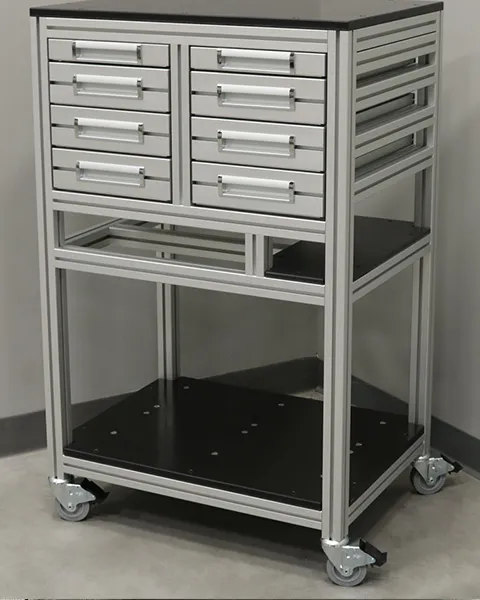
Ask for the rating of the exact caster assembly, not only the wheel. Define the load case, number of casters, equipment center of gravity, floor transitions and any impact or threshold events. An edge case occurs when an uneven floor temporarily unloads one caster and shifts more force to the others; a simple equal division of total mass may not represent that condition.
The buyer and supplier should agree on a test method and acceptance criteria before the sample is built. If the application is safety-critical or regulated, specify the required external standard or evidence in the RFQ rather than assuming certification. The public source discloses no universal caster certificate number.
Advantages: buyers can combine caster format, wheel material, mounting, bearing and brake choices around an equipment layout. This supports OEM matching instead of forcing one fixed catalog assembly.
Limits: each added choice changes the approved configuration. A wheel material or brake selected from the same family does not automatically inherit another model’s load, clearance or test result. Configuration control becomes part of purchasing and incoming inspection.
Price requires a quotation. The supplied reference does not publish a price range. Send quantity, wheel material, caster format, mounting, bearing, brake, requested evidence and packaging so the quotation refers to one controlled configuration.
Match the delivered model to the approved drawing and sample. Check mounting dimensions, wheel material identification, caster orientation, bearing and brake configuration, finish, labels, quantity and packaging condition. Functional sampling should follow the acceptance plan agreed before production.
Review HIPAD’s caster range. For component-level specification ideas, use the nylon roller wheel checklist. Procurement teams can also reference the wholesale hardware supplier checklist ve custom hardware OEM guide. Send the controlled RFQ through the HIPAD contact page.
Allen Wang is CEO and Founder of HIPAD. He began as a technical engineer in 1998 and focuses on manufacturing, tooling, quality, OEM/ODM development and architectural hardware supply.
24 saat içinde yanıt vereceğiz. Acil talepleriniz için WhatsApp/WeChat üzerinden +86 137 9191 8989 numarasından bize ulaşabilir veya aynı numarayı doğrudan arayabilirsiniz.
*Gizliliğinize saygı duyuyor ve tüm bilgilerinizi koruyoruz.
Bilgilerinizi yalnızca talebinize yanıt vermek için kullanırız; izniniz olmadan e-posta veya tanıtım mesajı göndermeyiz.